
How to Play Order Puzzles Without Guessing
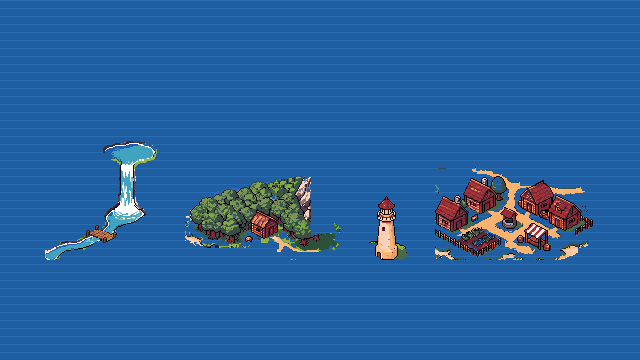
Eight items can be placed in 40,320 different orders. If you try one order per minute and never repeat yourself, brute force takes about four weeks of continuous play. Nobody solves these games that way, and nobody is supposed to. Here is what to do instead.
1. Your order is a time budget
This is the one idea the whole genre rests on. After each placement, everything already on the board tries to advance one level. So the first thing you place gets a chance to grow on every turn that follows, and the last thing you place gets one chance, ever.
Turn that around and it becomes a rule you can actually use: look at how many levels each item needs, and give the long ones the early slots. An item with five stages cannot possibly finish if you place it sixth. You do not need to know anything else about the puzzle to rule that out, and ruling things out is most of the work.
2. Find the root of the dependency tree
Every item's growth is gated by a condition, and those conditions point at other items. Write them out and you get a tree. Somewhere near the bottom of it there is an item whose own growth depends on nothing, or almost nothing, while several other items are waiting on it.
That item is the root, and roots go early. Not because it is obviously important, but because everything downstream of it is stuck until it moves. In most order puzzles there is exactly one, and finding it converts a wall of possibilities into a much smaller question: what goes second?
Read the chart, not the picture
It is tempting to place things because they look like they belong together. The art is deliberately charming and it will lead you astray. The evolution chart is the actual rulebook, and ten minutes with it beats an hour of pretty guesses.
3. Some items are hazards, and hazards wait
Order puzzles usually include at least one item that damages its neighbours rather than cooperating with them. It will have a condition attached to the harm, something like "this hurts that, as long as that is still small."
Two things follow. First, the victim needs to outgrow the danger before the hazard arrives, so the hazard goes late. Second, and this is the part that catches people, the check usually runs every turn, not just on the turn you place it. A hazard sitting quietly on the board will still ruin something you add five turns later. If a run keeps dying to the same cause, look at what was already there rather than what you just placed.
4. Cheap items are your flexible slots
Any item that only needs one or two levels is nearly free to place late. It does not need a long runway, so it can absorb whichever slot is left over. Identify those early and you have effectively shortened the puzzle: six real decisions instead of eight.
Then experiment properly
Once you have a plausible order, do not throw it away when it fails. Change exactly one position and run it again. If you shuffle three items at once and the score moves, you have learned nothing about which change mattered.
Read the failure message every time. A run that ends with six items maxed and one dead is not a failed run, it is a labelled data point: it tells you which pair is in conflict and roughly where in the sequence the conflict happens. Three or four careful runs usually produce more information than twenty careless ones.
What a good run feels like
You will know you are close when nothing dies and the score stops moving. That usually means the order is safe but somebody ran out of turns, which is a much smaller problem than a death: you are looking for two adjacent items to swap, not a new plan.
Put it into practice Island Evolution has 8 items, 40,320 orders and exactly 3 that reach a perfect score. Free in your browser, no download.
▶ Play free